
Contact us
Get Your Free Consultation
Initial consultations are free, and we offer evening and weekend appointments upon request. Let us know what you’re going through and we’ll reach out with your next steps.


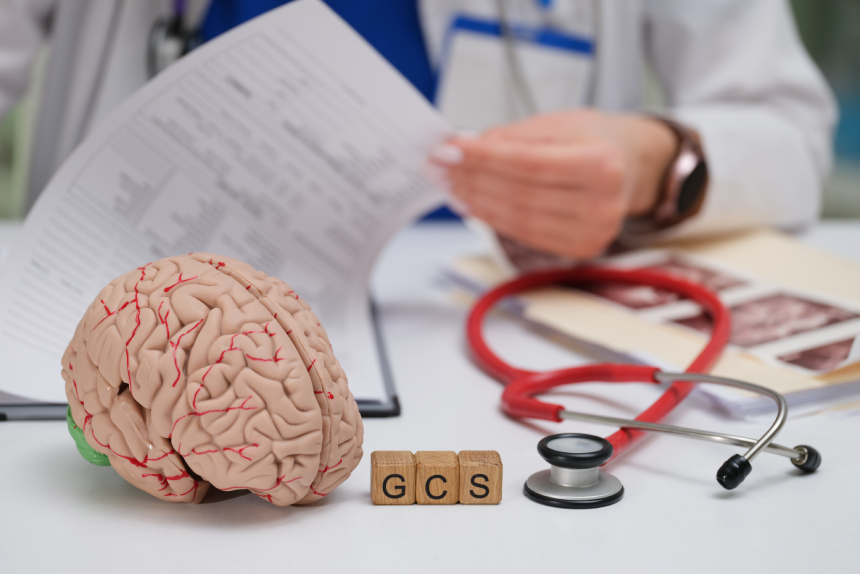
A brain injury that results from head trauma can affect your level of consciousness. If your injury is severe, it can send you into a coma. Assessing your consciousness level can be helpful for determining the severity of the brain injury. The Glasgow Coma Scale is a tool that doctors use to make that assessment.
According to the Centers for Disease Control, the GCS measures patient responsiveness in three main areas: eye-opening response, motor response and verbal response. The doctor making the assessment uses specific stimuli to try to produce a reaction. The more normal and intentional your response, the more points you receive on the Glasgow Coma Scale. Higher GCS scores correspond to a higher level of consciousness.
For example, if your doctor were to ask you questions and you were able to respond appropriately and lucidly, you would earn five points for the verbal response section. If you were able to respond to questions but your answers demonstrated confusion, you would only receive four points. Doctors typically ask orienting questions to ensure that you know who you are, where you are and what has happened lately.
Similarly, if you are able to move purposefully in response to verbal commands, you get a motor response score of six, whereas you get fewer points for any movement that is reflexive. You get eye-opening response points if you can open them upon command, but fewer than if they are open and blinking at baseline.
GCS head injury classifications are as follows:
The lowest possible GCS score is three. It results from no response in the three main areas and amounts to a coma.