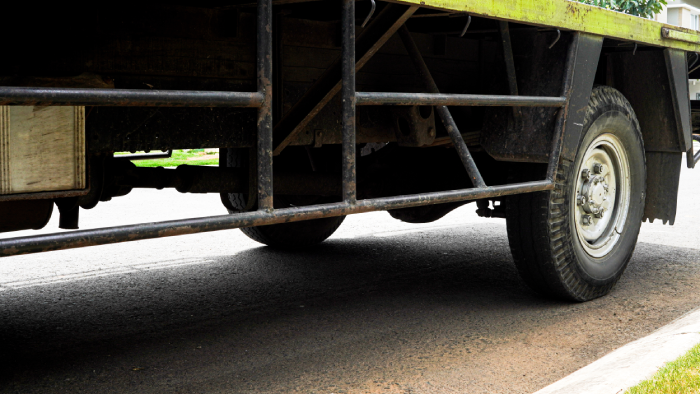
Getting hit by a semi, box truck, or delivery van is not a fender-bender. Someone is usually seriously hurt, a vehicle is destroyed, and the phone starts ringing fast, often with a representative for the trucking company on the other end rather than a routine adjuster. Many trucking companies dispatch investigators to the scene before the tow truck has even left, working to build their defense while you’re still in the emergency room.
You deserve a team that moves just as fast on your side. At Beem & Isley, our Denver truck accident lawyer team has represented injured Coloradans since 1968. We’re a boutique litigation firm, which means the person who answers your call is a lawyer, not a lead-intake script, and we prepare every case for a Denver courtroom rather than a quick, low settlement. If a commercial truck crash has upended your life, our Denver personal injury lawyers know exactly what evidence to lock down in the first weeks.
Request a free, confidential case evaluation or call (303) 894-8100 today.
Why Truck Accident Claims Are Nothing Like Car Accident Claims
A crash with an 80,000-pound tractor-trailer is a fundamentally different case than a crash between two passenger cars. The injuries are more severe, the money at stake is larger, and the defense is far more sophisticated. A few key differences set truck cases apart:
- Federal regulation: Interstate trucking is governed by the Federal Motor Carrier Safety Administration (FMCSA), whose rules on driver hours, maintenance, and inspections create obligations, and violations, that don’t exist in an ordinary car case.
- Onboard data: Modern trucks record a trail of evidence, from electronic logging devices (ELDs) to the engine control module (the truck’s “black box”), that can prove speed, braking, and how long the driver had been on the road.
- Layered insurance: A commercial truck often carries far more coverage than a personal auto policy, sometimes stacked across the driver, the carrier, the cargo owner, and a broker.
- Corporate defendants: You’re not just facing a driver. You’re facing a company with lawyers and a rapid-response team whose job is to limit what it pays.
- A ticking evidence clock: Logs, data, and physical evidence can be overwritten or lost within weeks unless someone forces them to be preserved.
This is why truck and car cases are handled so differently. A passenger-car adjuster may simply dispute your medical bills; a trucking accident defense team will challenge liability itself, argue that you contributed to the crash under Colorado’s comparative negligence rule, and lean on the resources of a national carrier to wear you down.
If your crash involved a passenger vehicle rather than a commercial truck, our Denver car accident lawyer team can help with that instead.
Common Causes of Denver Truck Accidents
Most truck crashes trace back to preventable decisions, often by people other than the driver. Understanding the cause is the first step toward proving who should pay.
Driver Fatigue and Hours-of-Service Violations
Fatigue is one of the most common and most dangerous factors in a Denver truck accident. Federal hours-of-service rules exist specifically to prevent it, and violations frequently point straight to liability:
- Property-carrying drivers may drive a maximum of 11 hours after 10 consecutive hours off duty.
- Driving is barred beyond the 14th consecutive hour after coming on duty.
- Drivers must take a 30-minute break after 8 cumulative hours of driving.
- Weekly limits cap driving at 60 hours over 7 days or 70 hours over 8 days.
When a trucking company pressures drivers to skip breaks or falsify logs to hit a delivery window, the ELD data and dispatch records often expose it. A tired truck driver behind the wheel of a fully loaded rig has slower reaction time, impaired judgment, and a greater risk of drifting or rear-ending stopped traffic. Fatigue is one of the leading causes of a serious trucking accident, and because the federal rules are so specific, an hours-of-service violation can move a case from a contested fault fight to a clear liability picture. That is why one of the first things we do is demand the driver’s logs before they can be altered.
Negligent Maintenance, Overloaded Cargo, and Unsafe Hiring
Many trucking accident cases have nothing to do with a momentary driving error. They start long before the crash, in a company’s shortcuts:
- Poor maintenance, such as worn brakes, bald tires, or ignored inspection defects.
- Overloaded or improperly secured cargo that shifts, causes a rollover, or falls onto the roadway.
- Negligent hiring and supervision, including putting a driver with a bad record or inadequate training on the road.
- Unrealistic schedules that reward speed over safety.
Each of these points to potential corporate liability beyond the driver, which is exactly where the larger sources of compensation usually live. A truck driver may be the one at the wheel, but the company that skipped an inspection, loaded the trailer unevenly, or put an unqualified driver on a mountain route often bears the real responsibility. Proving that requires digging into maintenance logs, hiring files, and cargo manifests, records a trucking company would prefer you never see. Building a trucking accident case around those documents is where decades of Colorado litigation experience pays off.
Semi-Truck, 18-Wheeler, and Commercial Vehicle Cases We Handle
Our attorneys handle the full range of commercial truck crashes across the Denver metro area. No two are alike; the vehicle type, the cargo, and the company behind it all change how a case is built. We regularly represent people hurt in:
- Semi-truck, 18-wheeler, and tractor-trailer collisions
- Box truck and flatbed crashes
- Delivery van and last-mile delivery vehicle accidents
- Tanker and hazmat truck crashes
- Dump truck and construction vehicle collisions
- Jackknife, underride, and rollover accidents
We also cross-handle related cases; if a two-wheeled vehicle was involved, our motorcycle accident attorneys can help.
Amazon, UPS, and Delivery Truck Accidents
The explosion of e-commerce has put thousands of delivery vehicles on Denver streets, and crashes involving them raise unusually tricky questions about who’s responsible. A driver may be a direct employee, an independent contractor, or work for a third-party delivery service partner, and each arrangement changes which insurance applies and whether the parent company can be held liable.
Amazon, for example, routes much of its last-mile delivery through separate contractor companies, a structure that can shift responsibility in ways designed to protect the brand. A rushed delivery driver racing to hit a quota can cause the same devastating injury as any semi, but sorting out the coverage takes work.
Whether you were hit by an Amazon van, a UPS truck, or another carrier, we untangle those layers. Our work as a Denver UPS truck accident lawyer and with Amazon crashes starts by identifying every responsible party.
Semi-Truck and 18-Wheeler Crashes on I-70 and I-25
Denver’s freight arteries concentrate the region’s worst truck wrecks. Heavy semi-truck and 18-wheeler traffic on I-70 and I-25, combined with the metro delivery corridors and steep mountain grades, produces high-speed collisions where the size difference between a passenger car and a commercial truck leaves little margin for error.
A loaded 18-wheeler can weigh 20 to 30 times more than a car and needs the length of a football field or more to stop. When a semi-truck jackknifes on an icy grade or a driver misjudges a downhill stretch of I-70, the results are often catastrophic. These crashes frequently involve disputed fault and demand fast evidence preservation before the trucking company’s onboard data is overwritten.
Who Is Liable After a Colorado Truck Accident?
One of the biggest differences in a truck case is that liability rarely stops with the person behind the wheel. Identifying every responsible party is what separates a full recovery from a fraction of one, and it’s a core focus for any experienced Colorado truck accident lawyer.
The Truck Driver
The truck driver may be directly at fault for speeding, distraction, impairment, or an hours-of-service violation. A driver who was texting, drove past the legal limit of on-duty hours, or ignored weather conditions can be held personally negligent. But a driver’s personal insurance is often only one layer of the available coverage, and rarely the largest. In most cases, the more significant question is what the driver’s employer knew and allowed.
The Trucking Company, Cargo Loaders, and Other Third Parties
Under legal doctrines like respondeat superior and theories of negligent hiring, training, and maintenance, a trucking company can be held responsible for its driver’s conduct and its own corporate failures. Depending on the facts, liability may also extend to:
- The company that loaded or secured the cargo
- A separate maintenance or repair contractor
- The broker or shipper that arranged the load
- A parts manufacturer, in cases involving a defect
Because a trucking company and its insurers move quickly to shield themselves, pinning down each responsible party early is essential. It also opens access to the layered insurance that makes truck cases different: federal rules generally require interstate carriers to carry at least $750,000 in liability coverage for general freight, and often far more for hazardous loads. Reaching those policies, rather than a driver’s minimal personal coverage, frequently determines whether a seriously injured person can actually be made whole.
Colorado follows a modified comparative negligence rule and a three-year statute of limitations for motor vehicle crashes, so the sooner the investigation begins, the stronger your position.
Serious Injuries in Denver Truck Accident Cases
The sheer force involved in a commercial truck collision tends to cause life-altering harm. A crash that would be minor between two cars can leave a person with a permanent injury when a fully loaded rig is involved. Common injuries in these cases include:
- Traumatic brain injuries, including severe cases documented through tools like the Glasgow Coma Scale
- Spinal cord injuries and paralysis
- Multiple fractures and crush injuries
- Internal organ damage and internal bleeding
- Amputations and disfigurement
- Burns from fuel or cargo fires
Some of these injuries are obvious at the scene. Others, like a brain injury or internal bleeding, may not fully surface for hours or days, which is one more reason to seek immediate medical care and follow through on every recommended treatment. A well-documented injury is far harder for an insurer to minimize than one with gaps in the medical record.
Many of these rise to the level of catastrophic harm requiring lifelong care. For the most severe outcomes, our catastrophic injury representation is built to account for a lifetime of medical needs and lost opportunity, not just today’s bills.
What Is Your Truck Accident Claim Worth?
No honest firm can promise a figure without the facts. What we can do is make sure every category of loss is fully documented and pursued, because truck cases often involve the kind of severe, long-term injury where undervaluation costs the most. A settlement has to cover not just what an injury has already cost you, but what it will cost for the rest of your life. Truck accident claims generally fall into three categories of damages.
Medical Expenses — Now and in the Future
The medical cost of a serious truck accident injury rarely ends when you leave the hospital. Your claim should account for far more than the first bill, including:
- Emergency treatment, surgery, and hospitalization
- Rehabilitation, physical therapy, and assistive devices
- Future surgeries and long-term or lifelong care
- Home modifications and in-home assistance
For a permanent injury, we work with medical and life-care planning experts to project those future costs credibly, so an insurer can’t quietly leave them out of the equation.
Lost Wages and Earning Capacity
A serious truck accident injury can keep you out of work for months or permanently reduce what you’re able to earn. Recoverable losses include past lost wages, diminished earning capacity, and lost benefits and retirement contributions. Pursuing the maximum compensation available means valuing your future, not just your missed paychecks.
Pain, Suffering, and Colorado’s Damage Caps
Colorado allows recovery for non-economic harm such as pain, suffering, and loss of enjoyment of life, but it also caps certain non-economic damages, and those limits adjust over time. In a fatal crash, surviving family members may instead pursue wrongful death claims in Colorado, which carry their own rules and deadlines.
How Much Do Most Truck Accident Settlements Average?
People understandably want a benchmark, but “average” is close to meaningless for truck cases. Outcomes swing enormously based on the severity of the injuries, the layers of insurance available, the clarity of liability, and the long-term impact on your life. A minor injury with a quick recovery looks nothing like a spinal cord injury requiring lifelong care, and truck cases tend to cluster at the more serious, higher-value end precisely because of the forces involved.
Beware any firm or online calculator that quotes you a number before reviewing the facts; a figure offered that early is a marketing tactic, not a valuation. Rather than chase an average, we focus on proving every element of your specific claim, from the last future surgery you’ll need to the promotions you’ll never get. For a sense of the process timeline, our guide on how long a car accident settlement takes in Colorado covers many of the same stages a truck claim moves through.
What to Do After a Truck Accident in Denver
The steps you take in the first hours and weeks can shape the entire case. Trucking companies act fast, so it helps to know what protects your claim before their team gets ahead of you.
At the Scene: Safety, Police, and Photos
Your health comes first, but if you’re physically able, a few actions at the scene can make a lasting difference:
- Move to safety and call 911; make sure a police report is created.
- Photograph the vehicles, the truck’s markings and company name, the road, and your injuries.
- Get names and contact information for the driver, the company, and any witnesses.
- Accept medical evaluation even if you feel able to decline it.
The First Two Weeks: Evidence the Trucking Company Wants Gone
Critical proof can vanish quickly. In the weeks after a crash, it’s often necessary to formally demand preservation of:
- Electronic logging device (ELD) and engine “black box” data
- Driver hours-of-service logs and dispatch records
- Truck maintenance and inspection history
- The driver’s qualification file and any drug or alcohol testing
- Dashcam footage and the physical truck itself
A prompt spoliation (evidence preservation) letter can stop a company from letting this data disappear, which is one reason contacting a lawyer early matters so much.
Before You Talk to Any Insurance Adjuster
- Don’t give a recorded statement to the trucking company’s insurer.
- Don’t accept an early settlement offer before your injuries are understood.
- Don’t sign broad medical authorizations.
- Do direct all communication through your attorney.
Adjusters for a trucking company are trained to sound friendly while gathering statements they can later use to reduce or deny your claim. You are under no obligation to give them one. Politely declining and routing everything through your lawyer costs you nothing and protects the value of your case.
How Our Denver Truck Accident Lawyers Build Your Case
Preparation is what forces a trucking company and its insurers to take a claim seriously. Because we prepare every file for a courtroom, insurers can’t count on us blinking first. That reputation is itself leverage: a trucking company’s carrier prices its offers based on whether it believes the firm across the table will actually try the case.
Since 1968, we’ve given Colorado insurers every reason to take our clients seriously. You can meet our trial attorneys and see exactly who will handle your case from start to finish.
Get a Free, Confidential Case Evaluation From Our Denver Truck Accident Team
If you or someone you love was hurt in a crash with a semi, 18-wheeler, or delivery truck, you don’t have to face the trucking company and its insurers alone. Beem & Isley has fought for injured Coloradans since 1968, and we prepare every case as if it’s going before a Denver jury.
Request your free, confidential case evaluation or call (303) 894-8100 today. We’ll listen, explain the federal trucking rules in plain English, and tell you honestly what your case is worth.
Denver Truck Accident FAQ
How long does a truck accident lawsuit take? It depends on the severity of the injuries and how hard the defense fights. A clear-liability case with a completed recovery may resolve in several months, while a serious case with disputed fault, multiple defendants, and ongoing treatment can take a year or more. Cases prepared thoroughly for trial often settle sooner, and for more, than cases that look easy to lowball.
What is the average settlement for a car accident in Colorado? There’s no meaningful average, for car or truck crashes. Values range from a few thousand dollars for minor property damage to seven figures for catastrophic injuries, depending on the injuries, insurance coverage, fault, and long-term impact. Truck cases in particular tend to involve higher coverage limits and more severe injuries, which is why individualized valuation matters far more than any statewide average.
Who is liable for a truck accident? Often more than one party. The driver, the trucking company, a cargo loader, a maintenance contractor, or a parts manufacturer may all share responsibility. Identifying every liable party is key to accessing the full insurance coverage available.
Can the truck’s black box data be used as evidence? Yes. Data from the engine control module and the electronic logging device can reveal speed, braking, throttle, and exactly how many hours the truck driver had been on the road. That information is often the difference between a “he said, she said” dispute and provable liability. But it must be preserved quickly, since it can be overwritten in a matter of days or weeks, which is why prompt legal action is so important.
How much does a Denver truck accident lawyer cost? Our firm handles these cases on a contingency basis, so there’s no upfront cost and no fee unless we recover compensation for you. The initial case evaluation is free. For someone facing a serious injury and mounting bills with no income coming in, that arrangement is what makes experienced representation possible at all.