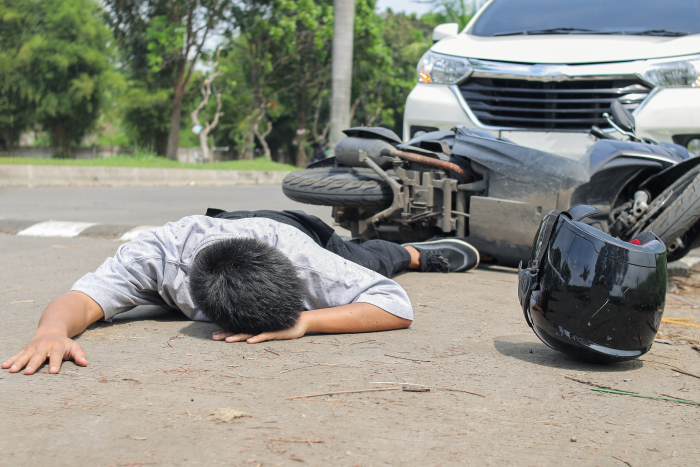
One careless driver, one unsafe lane change, or one missed stop can leave a rider with devastating injuries and months, or even years, of recovery ahead.
Motorcycle accidents differ from ordinary car or truck accidents. Riders have very little protection in a collision, and the injuries are often severe even at lower speeds.
At Beem & Isley, our injury attorneys understand how quickly a motorcycle crash can change a person’s life.
Each experienced Denver motorcycle accident attorney represents injured riders throughout Denver County and across Colorado in serious personal injury cases, including motorcycle accidents, catastrophic injury claims, and wrongful death matters.
Our firm has earned recognition for providing trusted legal representation to injury victims, including being named among the Best Motorcycle Accident Lawyers in Denver, Colorado, by Forbes Advisor’s rankings.
We combine decades of litigation experience with personalized attention to help clients pursue the compensation they need after a serious crash.
Contact Beem & Isley for a free case review now!
What Is The Statute Of Limitations For A Motorcycle Injury Claim In Colorado?
If you were hurt in a motorcycle accident in Denver, you may be entitled to compensation.
Colorado law generally gives injured people three years to file personal injury claims arising from the use or operation of a motor vehicle.
Colorado also follows a modified comparative negligence rule, which means your recovery can be reduced by your share of fault and barred if your negligence is as great as the defendant’s.
Those rules matter in every motorcycle accident, but they matter even more in motorcycle claims because riders are so often blamed unfairly.
Even when another driver clearly caused the accident, insurers may try to argue that the victim was speeding, hard to see, or taking unnecessary risks.
At Beem & Isley, our accident attorneys know how to push back against those assumptions and focus the case on the actual evidence.
Why Motorcycle Accidents Are More Dangerous in Denver
A motorcycle accident is often more serious than car accidents because riders lack the same physical protection as occupants of passenger vehicles.
There is no metal frame surrounding the rider, no seatbelt to restrain the body, and far less protection against direct impact with a car or truck, the road, or roadside objects.
An accident that might leave a driver with soreness can leave a motorcyclist with broken bones, brain trauma, road rash, or permanent disability.
Motorcycle riders are also more exposed to secondary impacts. In many cases, the rider is first struck by the vehicle and then thrown onto the pavement or into another object.
That second impact can cause some of the most severe injuries in the case.
Because of this, motorcycle accident claims often involve far greater damages than those in a standard crash, even when the property damage appears limited on paper.
Lack Of Protection Compared To Cars
A passenger in a car benefits from layers of protection, including airbags, doors, reinforced frames, and restraints. A motorcyclist does not. Even with a helmet and protective gear, a rider remains physically vulnerable in ways that no passenger-car occupant does.
This is why we treat motorcycle accident cases as high-stakes injury claims from the start. The consequences are often life-altering, and the legal strategy has to reflect that reality.
Contact Beem & Isley Now to Get Started!
What are the Most Common Causes Of Motorcycle Accidents in Denver?
Common causes of motorcycle accidents in Denver include:
- Drivers turning left in front of a rider
- Unsafe lane changes
- Distracted driving
- Speeding
- Tailgating
- Failure to yield
- Impaired driving
- Road hazards
Most motorcycle accidents occur because another person failed to exercise reasonable care.
Drivers often claim they “never saw” the rider, but that does not excuse the negligence. In many cases, the real problem is not invisibility.
It is failure to look carefully, failure to yield, distraction, impatience, or reckless decision-making.
Some cases also involve defective parts or dangerous roadway conditions that contributed to the crash.
Our Denver motorcycle accident lawyers investigates each case carefully because how the crash happened directly affects both liability and value.
Distracted Drivers And Visibility Issues
Drivers who glance at a phone, rush through an intersection, or fail to check blind spots can easily miss an approaching motorcycle. That is especially dangerous at intersections and during lane changes.
Motorcycle crashes often happen not because the rider did something wrong, but because the other driver made a careless assumption about speed, distance, or visibility.
Visibility issues also become a defense tactic after the crash. Insurers may argue that the rider should have anticipated the danger or made it more visible.
We work to keep the focus where it belongs: on whether the driver used reasonable care under the circumstances.
Road Hazards And Unsafe Conditions in Denver
Motorcycles are also more sensitive to road defects than passenger vehicles. Loose gravel, potholes, uneven pavement, slick surfaces, poor drainage, and debris in the roadway can cause a rider to lose control.
In other cases, road hazards combined with another driver’s negligence may worsen the crash. These types of accidents may require a deeper investigation into maintenance practices, hazard notification, and whether another party may share responsibility.
Different Types Of Motorcycle Accidents
Motorcycle accidents around Denver happen in many ways, but some patterns appear more often than others. Understanding the type of crash can help explain how the wreck happened and why the injuries are so severe.
Single-vehicle motorcycle crashes may result from road hazards or evasive maneuvers, but many of the most serious claims involve collisions with passenger vehicles, commercial trucks, or rideshare drivers.
Motorcycle accidents often happen at intersections, during merges, in stop-and-go traffic, or when a driver fails to respect the rider’s right of way.
Left-Turn And Intersection Accidents
One of the most common motorcycle accident scenarios involves a vehicle making a left turn in front of an oncoming rider. The turning driver may claim they thought they had time, misjudged the rider’s speed, or simply did not see the motorcycle.
These crashes can be catastrophic because the rider often has little time to avoid the collision.
Intersection accidents on Denver roads also happen when drivers run red lights, roll through stop signs, or fail to yield while entering traffic. In these cases, witness statements, traffic camera footage, vehicle damage, and evidence at the scene can be critical to proving fault.
What are the Most Common Injuries in Motorcycle Accidents in Denver?
Motorcycle crashes often cause serious, painful, and expensive injuries. Even when a rider survives, the recovery may involve emergency treatment, surgery, rehabilitation, and permanent limitations.
The physical damage can affect nearly every part of daily life, from working and driving to sleeping and caring for family responsibilities.
Many motorcycle accident victims suffer multiple injuries at once. A rider may have a head injury, fractured bones, road rash, and internal trauma from the same wreck. That is one reason these claims require a full understanding of both immediate and future damages.
A traumatic brain injury can happen even when the rider wears a helmet. The force of a collision can cause the brain to move within the skull, leading to headaches, dizziness, memory issues, confusion, mood changes, and difficulty concentrating. In severe cases, the effects may last permanently and interfere with work, relationships, and independence.
Road Rash And Fractures
Road rash is often treated as a minor injury, but in serious cases, it can involve deep skin damage, risk of infection, permanent scarring, nerve damage, and the need for skin grafting. Fractures are also common in motorcycle crashes, especially in the arms, legs, ribs, pelvis, and collarbone.
Some broken bones require surgery and extensive physical therapy, while others never fully return to normal function.
Bias Against Motorcyclists In Injury Claims
Motorcyclists face a problem many other injury victims do not: built-in bias. Some drivers, adjusters, and even jurors start with unfair assumptions about riders. They may picture all motorcyclists as reckless, aggressive, or thrill-seeking.
That bias can shape how a motorcycle accident claim is investigated, valued, and defended.
At Beem & Isley, our experienced personal injury lawyer knows these stereotypes can hurt a valid case. That is why we focus heavily on evidence. We do not let assumptions stand in for facts.
When another driver caused the wreck, we worked to show clearly how the crash happened, what the rider suffered, and why the defense should not be allowed to shift blame based on a stereotype.
Insurance Company Bias And Challenges
Insurance companies understand how these biases work and often try to exploit them to their advantage. They may argue that the rider was speeding, weaving, or taking risks even when the actual evidence does not support those claims.
They may also try to minimize the seriousness of the injuries or argue that the rider accepted the danger simply by riding a motorcycle.
Our job is to challenge those tactics. A motorcyclist has the same right to use the road as any other driver, and a negligent driver should still be held accountable for the harm they cause.
Who Is Liable In A Motorcycle Accident?
Liability in a motorcycle accident case depends on the facts. In many cases, the at-fault party is another driver who failed to yield, changed lanes unsafely, followed too closely, or drove while distracted or impaired.
But not every case is that simple. Sometimes liability may extend to a trucking company, a rideshare driver, a commercial employer, a road maintenance entity, or another party whose conduct contributed to the crash.
Colorado’s comparative negligence rule can become a major issue in these claims.
If the defense can assign a percentage of fault to the rider, it may reduce the amount owed. If the rider’s fault is found to be as great as the defendant’s, recovery may be barred.
That makes it critical to investigate early and preserve evidence before the defense can shape the story in its favor.
Proving Negligence And Fault
A successful motorcycle accident claim usually requires proof that another party owed a duty of care, breached that duty, caused the crash, and created compensable damages.
That proof may come from police reports, witness statements, scene photographs, vehicle damage, surveillance footage, phone records, or expert analysis.
What Compensation Can You Recover?
A motorcycle accident can lead to enormous physical, emotional, and financial losses.
The value of the claim depends on the seriousness of the injuries, the available insurance, the clarity of fault, the amount of lost income, and the long-term effect on the rider’s life. We do not approach these cases as simple settlement files.
We work to show what the crash truly cost.
Compensation in a motorcycle accident case may include emergency care, hospitalization, surgery, rehabilitation, prescriptions, lost wages, reduced earning capacity, pain and suffering, emotional distress, scarring, disfigurement, and future medical needs.
In a catastrophic injury case, future care and long-term loss of earning capacity may be among the most important parts of the claim.
Economic And Non-Economic Damages
Economic damages are the measurable financial losses caused by the crash, such as medical bills, therapy costs, lost income, and out-of-pocket expenses.
Non-economic damages involve the human cost of the injury, including pain, inconvenience, emotional distress, physical impairment, and loss of enjoyment of life.
Motorcycle accident cases often involve both parties significantly. A rider may face major surgical bills and months out of work, but that is only part of the story.
The case may also involve permanent scarring, chronic pain, limited mobility, reduced independence, and the loss of activities that once defined the person’s life.
How Motorcycle Accident Claims Work
A motorcycle injury claim often begins with an insurance investigation, but serious cases should be treated as litigation matters from the beginning.
The insurer may request statements quickly, seek broad medical releases, or make an early offer before the rider understands the full extent of the injuries. That is one reason early legal guidance matters.
Our team typically begins by reviewing the crash facts, collecting records, identifying available insurance, and documenting the injuries and the course of treatment.
We also closely examine any argument the defense may raise regarding comparative fault, prior injuries, or alleged rider behavior.
Filing A Claim And Settlement Process
The claim process often starts with a demand package that explains liability, treatment, damages, and the basis for compensation. Some motorcycle accident cases are settled through negotiation. Others require filing suit, taking depositions, working with experts, and preparing for trial.
The right path depends on the insurer’s response and its willingness to evaluate the claim fairly.
Why Choose Beem & Isley For Your Case
Choosing the right lawyer after a motorcycle crash is an important decision.
You want a firm that understands serious injuries, knows how insurance companies defend motor vehicle cases, and is prepared to build a strong claim thoroughly instead of rushing toward a quick settlement.
At Beem & Isley, our Denver motorcycle accident attorneys bring decades of personal injury litigation experience to complex motorcycle accident cases throughout Colorado.
We are a small firm, which allows us to give close attention to every client, maintain direct communication, and provide the personalized representation injured riders deserve.
Our commitment to client advocacy and results has earned recognition from external sources, including being named one of Forbes’ Best Motorcycle Accident Lawyers in Denver.
We take pride in helping accident victims navigate difficult recoveries while aggressively pursuing compensation for medical expenses, lost income, pain and suffering, and long-term damages.
Contact Our Denver Motorcycle Accident Lawyer Today
If you were injured in a motorcycle accident in Denver or anywhere in Colorado, our team at Beem & Isley is here to help.
A motorcycle accident can leave you dealing with pain, uncertainty, and financial pressure all at once.
You should not have to deal with the insurance company on your own while trying to heal.
Contact us today for your free consultation!