Contact us
Get Your Free Consultation
Initial consultations are free, and we offer evening and weekend appointments upon request. Let us know what you’re going through and we’ll reach out with your next steps.


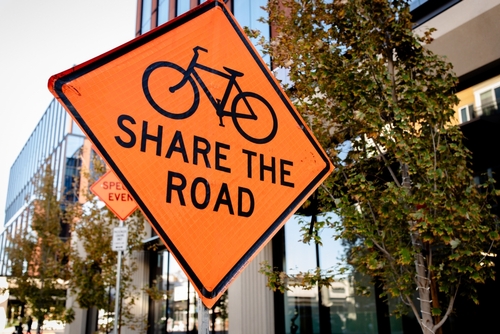
Colorado drivers must leave at least three feet between their vehicle and a bicyclist or e-bike rider when passing, and when they can’t pass safely, they must wait behind. That rule is only one of several duties drivers owe cyclists. Turning, opening doors, following distance, and yielding can all matter in a crash claim, though a traffic violation doesn’t automatically dictatex who is responsible in a civil case.
At Beem & Isley, P.C., we help injured Denver-area cyclists work out which driver duties were broken and how to prove it. If you were hurt in a bicycle crash, call (303) 894-8100 to talk with our team.
Under C.R.S. § 42-4-1003, a driver overtaking a bicyclist traveling in the same direction must allow at least three feet of separation between the right side of the vehicle and the left side of the cyclist. A driver who can’t leave that space has to slow down and stay behind until the pass can be made safely. The rule applies on every road where bicycles are allowed, whether or not there’s a bike lane.
The three feet is measured from the widest part of the vehicle, including its mirrors and any other projections, to the widest part of the cyclist, including handlebars or a trailing arm. A close pass that clips a handlebar or knocks a rider off balance can happen without the car ever touching the bike. Photographs, helmet or dash video, and mirror damage can help reconstruct how close the vehicle actually came.
Colorado guidance allows a driver to cross a centerline to give a cyclist room, but only when oncoming traffic isn’t a danger and the move can be completed safely. Permission to cross a line is never permission to make an unsafe pass. Oncoming traffic, blind curves, speed, and lane width all affect whether a pass was reasonable, and the Colorado DOT’s guidance on commonly misunderstood traffic laws addresses this situation directly. The full text of the traffic code is in Colorado Revised Statutes Title 42.
Under C.R.S. § 42-4-1412, a person riding a bicycle on a roadway generally has the same rights and duties as the driver of a vehicle. Cyclists are also subject to bicycle-specific rules. A rider moving slower than traffic should generally stay in the right-hand lane or close to the right edge, but the statute lists exceptions, including passing, preparing for a left turn, avoiding hazards, and riding in a lane too narrow to share safely. A rider who takes the lane to avoid a hazard isn’t breaking the rule. The Colorado DOT’s information for bicyclists explains these rights and duties in plain language.
Many serious bicycle crashes happen when a driver turns across a cyclist’s path. A right hook occurs when a car passes a cyclist and then turns right directly in front of them, and a similar crash can happen when a driver pulls out of a driveway or turns left across a bike lane. Drivers are expected to check mirrors and blind spots, signal, and yield before crossing a bicyclist’s path.
Our Denver car accident lawyers see these crashes often, and the evidence usually comes down to where each vehicle was when the turn began.
Dooring happens when someone opens a vehicle door into a cyclist’s path. The rider can hit the door directly or swerve into traffic to avoid it. Colorado law prohibits opening a vehicle door on the side next to moving traffic unless it’s reasonably safe to do so. If you were doored, photograph the door, the car, and the position of parked vehicles, and get the driver’s and any passenger’s information.
Under C.R.S. § 42-4-1412.5, known as the Safety Stop, a cyclist may treat a stop sign as a yield sign and a red light as a stop sign, provided the cyclist slows, checks for traffic and pedestrians, and yields the right-of-way to anyone who has it. Local governments can opt out of the rule, so it doesn’t apply everywhere. The Safety Stop doesn’t make a cyclist automatically wrong when a car hits them in an intersection. A driver who ignores a rider who was lawfully in the intersection, or who was speeding or distracted, can still be responsible.
Drivers must keep a reasonable and prudent following distance under C.R.S. § 42-4-1008, and they must watch for bicycles before changing lanes or merging. Tailgating a cyclist, speeding past at close range, passing and then braking, or drifting toward the edge of the road can all put a rider at risk. Distraction makes every one of these worse. Each situation turns on speed, road conditions, and what the driver could see.
Bicycle crashes often come down to one driver’s account against one rider’s, so physical and video evidence carry a lot of weight. Useful evidence includes:
If you were hurt, take these steps:
Insurers often argue that a cyclist was partly to blame. Under C.R.S. § 13-21-111, a person whose fault is less than 50 percent can still recover, but their damages are reduced by their percentage of fault, and a person who is 50 percent or more at fault can’t recover.
A claim that a rider wasn’t visible or didn’t signal can shift a few percentage points, and a few points can change the outcome, so fault should be argued with evidence. Because the statute can change, an attorney should confirm the current rule for your case.
Beem & Isley, P.C. was founded by Clifford Beem and Mark Isley, and our attorneys bring more than 90 years of combined experience to injury cases. Beem has practiced for 50 years and has taken on every insurance company doing business in Colorado, and our name partner, Danielle Beem, holds an AV Preeminent rating from Martindale-Hubbell and has been noticed nationally in Forbes. As a small firm, we give your case personal attention from your first meeting until it’s resolved, and we offer after-hours appointments by special arrangement.
When you hire us, we handle the insurance companies, collect the video and records that prove what happened, and explain your options honestly. Under C.R.S. § 13-80-101, claims arising from motor vehicle accidents generally must be filed within three years, and a claim against a government entity requires written notice within 182 days, so waiting can cost you your claim. Learn more about our Denver bicycle accident lawyers, our Denver pedestrian accident lawyers, and our other personal injury practice areas.
Contact Beem & Isley at (303) 894-8100 today for a free initial consultation.
Yes. A driver overtaking a cyclist must leave at least three feet between the vehicle, including its mirrors, and the cyclist. If the driver can’t leave that room safely, the driver should slow down and wait behind the cyclist until the pass is possible.
Colorado guidance allows a driver to cross the centerline to give a cyclist three feet, but only when there’s no oncoming traffic and the pass can be completed safely. A driver who crosses the line and creates a close call or a crash isn’t protected by the exception.
Yes. Fault depends on the facts, and a court or insurer can assign a percentage of fault to a rider. Under Colorado’s comparative negligence rule, a cyclist who is less than 50 percent at fault can still recover, but the damages are reduced by their share.

