

Contact us
Get Your Free Consultation
Initial consultations are free, and we offer evening and weekend appointments upon request. Let us know what you’re going through and we’ll reach out with your next steps.


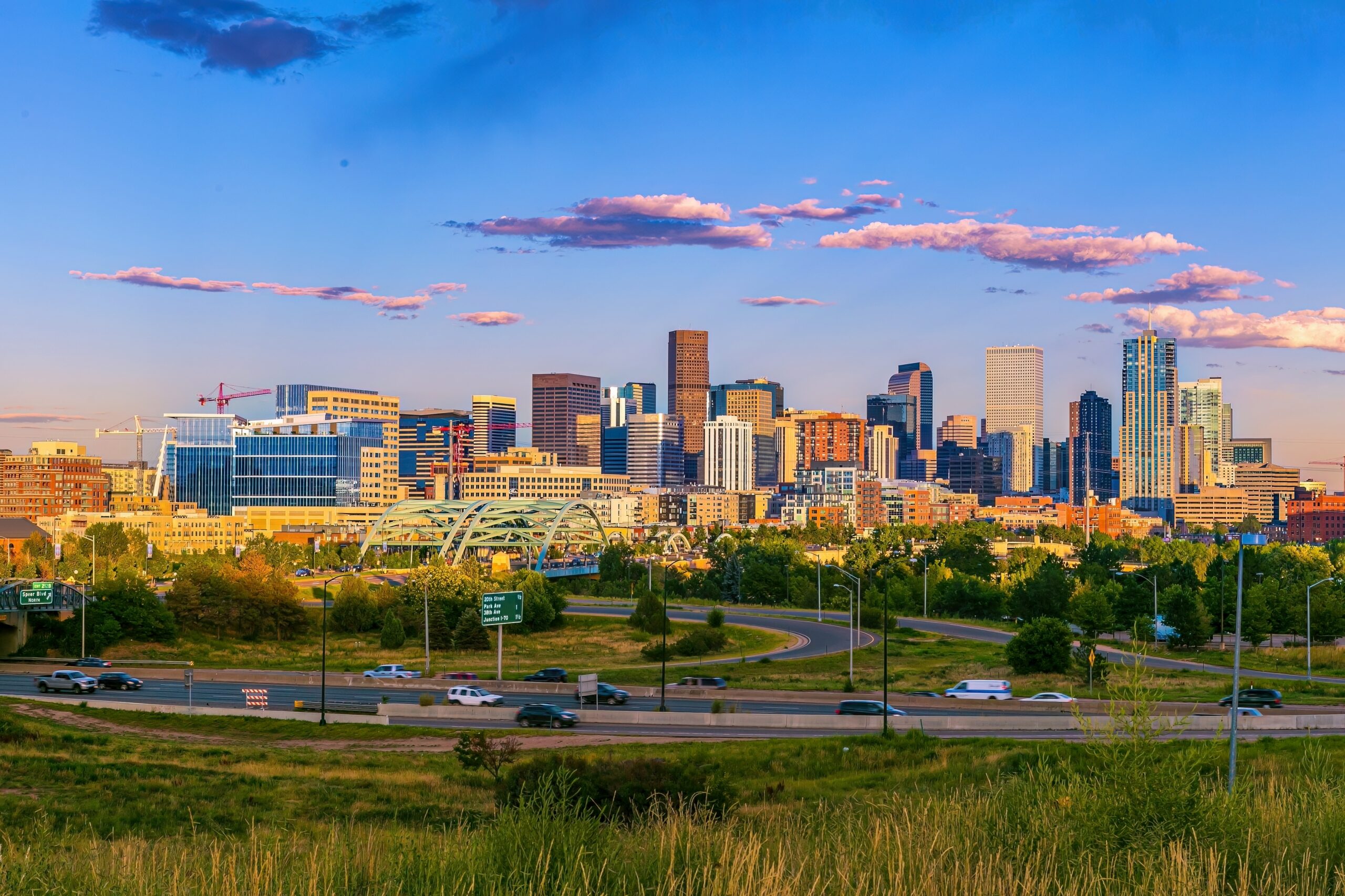
Denver drivers know that some roads feel more dangerous than others. A quick merge onto I-25, a left turn across Federal Boulevard, or a lane change near I-70 can become stressful fast. For pedestrians, cyclists, motorcyclists, and families driving across the city, these risks are more than frustrating. They can be life-changing.
In 2025, Denver recorded 93 traffic deaths, making it the city’s deadliest year on record. Many more people were seriously injured in crashes that happened at predictable locations, including freeway interchanges, busy arterials, and intersections with heavy traffic and low visibility.
This guide breaks down Denver’s most dangerous intersections, explains why crashes cluster in certain areas, and outlines what injured people should know after a crash. If you or a loved one was hurt at one of these high-risk locations, call (303) 894-8100 to speak with a Denver car accident lawyer today.
Traffic deaths are not random. They often happen where speed, traffic volume, road design, driver behavior, and pedestrian exposure overlap.
Denver’s Vision Zero program was created to eliminate traffic deaths and serious injuries, but 2025 showed how far the city still has to go. The year’s 93 traffic deaths represented a sharp increase from 2024 and reflected rising concerns about speeding, impaired driving, pedestrian safety, and dangerous corridors.
For injured people, these numbers matter because crash location can help explain how an accident happened. A dangerous intersection does not automatically prove fault, but it can reveal patterns that may support a legal investigation.
If you suffered serious injuries in a Denver crash, a Denver injury lawyer can help evaluate the roadway conditions, driver conduct, available footage, witness statements, and insurance issues involved in your case.
Denver’s 2025 traffic fatality total was more than a statistic. Each death represents a person, a family, and a community affected by preventable roadway danger.
The increase was especially concerning for pedestrians. Fatal crashes involving people walking remained a major part of Denver’s safety crisis, particularly along high-speed arterials where drivers, cyclists, scooters, buses, and pedestrians all compete for limited space.
| Statistic | 2025 Figure | Change From 2024 |
| Total Traffic Deaths In Denver | 93 | +13 |
| Pedestrian Deaths | 35 | +35% |
| Total Colorado Traffic Deaths | 701 | +2% |
| Passenger Vehicle Deaths Statewide | 392 | +5% |
| Impaired Driving Deaths Statewide | 235 | +11% |
These numbers show why Denver’s dangerous roads and intersections deserve close attention. When crash risk is known, drivers should be cautious, and city officials should continue improving roadway design, enforcement, visibility, and pedestrian protections.
Crashes tend to cluster where drivers face too many demands at once. A freeway interchange may require a driver to merge, brake, watch for lane changes, and respond to traffic backups in seconds. A busy city intersection may involve pedestrians, cyclists, turning vehicles, buses, delivery drivers, and limited sightlines.
At high-crash locations, even one mistake can trigger a serious collision. Speeding, distraction, tailgating, impaired driving, and aggressive lane changes all increase the risk.
Crash clusters can also show where road design contributes to danger. Short merge lanes, confusing signage, poor lighting, faded lane markings, and inadequate pedestrian crossings may all play a role.
Denver has grown quickly, and its roads have not always kept pace. More commuters, delivery vehicles, rideshare drivers, cyclists, scooters, and pedestrians now use streets that were not always designed for today’s volume.
Construction zones and changing lane patterns can make the problem worse. Drivers may be familiar with a route one week and encounter new cones, closures, detours, or lane shifts the next.
These conditions are especially dangerous on roads like I-25, I-70, Federal Boulevard, and Colfax Avenue, where high speeds or heavy traffic leave little room for error.
The most crash-prone intersection in Denver was I-70 Eastbound at North Peoria Street, with 103 reported crashes. Freeway interchanges dominate the top of the list, but major city streets such as Federal Boulevard, Alameda Avenue, and Colorado Boulevard also appear.
| Rank | Intersection | Total Crashes | Serious Injury Crashes |
| 1 | I-70 Eastbound / North Peoria Street | 103 | 5 |
| 2 | I-25 Northbound / West 6th Avenue | 98 | 5 |
| 3 | I-25 Northbound / East Hampden Avenue | 57 | — |
| 4 | West 6th Avenue / North Federal Boulevard | 51 | 4 |
| 5 | I-25 Southbound / 20th Street | 51 | — |
| 6 | I-25 Northbound / Colfax Avenue | 50 | 4 |
| 7 | West Alameda Avenue / South Federal Boulevard | 47 | 4 |
| 8 | I-25 Southbound / East Yale Avenue | 45 | 3 |
| 9 | South Colorado Boulevard / East Evans Avenue | 42 | 4 |
| 10 | I-70 Westbound / North Peoria Street | 41 | 3 |
These locations show how often serious crashes happen around high-speed interchanges and major arterial crossings. If you were hurt at one of these intersections, the location may help your attorney identify traffic patterns, roadway defects, nearby cameras, and other evidence.
Some roads are dangerous not because of one single intersection, but because crash risk repeats over several miles. Denver’s deadliest corridors include freeway segments, major commercial streets, and routes used heavily by pedestrians and transit riders.
These corridors often combine high speeds with frequent lane changes, business entrances, crosswalks, bus stops, and turning traffic. The result is a higher chance of severe injuries when crashes happen.
I-70 through northeast Denver has long been one of the region’s most dangerous corridors. Heavy truck traffic, freeway speeds, merging vehicles, and congestion all contribute to serious crash risk.
Commercial vehicle crashes can be especially severe because of the size and weight of trucks. If a large truck, delivery vehicle, or commercial driver caused your crash, a Denver truck accident lawyer can investigate driver logs, maintenance records, company policies, and crash reconstruction evidence.
I-25 through central Denver is another major danger zone. Drivers deal with frequent merging, short ramps, sudden backups, and heavy commuter traffic. The risk increases near exits for 6th Avenue, Colfax Avenue, 20th Street, Yale Avenue, and Hampden Avenue.
Rear-end crashes, sideswipe collisions, multi-vehicle crashes, and motorcycle crashes can all happen quickly in this environment. Riders are especially vulnerable because they have little protection when other drivers make unsafe lane changes or fail to see them. A motorcycle crash lawyer can help injured riders protect their rights after a serious crash.
Federal Boulevard is one of Denver’s most dangerous city streets because it combines high traffic volume, pedestrians, buses, businesses, driveways, and turning vehicles. Many crashes happen when drivers speed, turn left across traffic, fail to yield, or do not see pedestrians in time.
Crashes on Federal Boulevard may involve drivers, pedestrians, cyclists, motorcyclists, or passengers. Injuries can be severe, especially when a person is hit outside a vehicle or struck at higher speeds.
Colfax Avenue has a long history of serious and fatal crashes. The corridor includes heavy traffic, frequent crossings, transit stops, nightlife, commercial activity, and drivers entering or exiting businesses.
For pedestrians and cyclists, Colfax can be especially dangerous. Limited visibility, speeding, distraction, and nighttime conditions may increase crash risk.
Dangerous roads usually involve more than one risk factor. A location may have high traffic, confusing signage, poor lighting, a history of speeding, and a large number of pedestrians all at once.
Common factors include heavy traffic volume, complex merging patterns, poor visibility, speeding, distracted driving, impaired driving, pedestrian exposure, cyclist exposure, and construction-related lane changes.
A crash investigation should look beyond the final impact. It should examine what each driver did, what the road looked like, whether traffic controls were visible, and whether preventable hazards contributed to the collision.
If you were injured at one of Denver’s most dangerous intersections, do not assume the crash was “just an accident.” You may have the right to pursue compensation if another driver, company, or responsible party caused your injuries.
Fault is not automatically assigned based on location. Even at a high-crash intersection, the evidence still matters. Police reports, witness statements, vehicle damage, medical records, camera footage, road design, traffic signal timing, and crash reconstruction can all help show what happened.
A Denver car accident lawyer can help investigate whether speeding, distraction, failure to yield, unsafe lane changes, drunk driving, or commercial vehicle negligence played a role.
The location of your crash matters, but the way your case is built matters more. At Beem & Isley, we investigate every crash thoroughly, from intersection layout to driver behavior to available surveillance footage. If you were injured at one of these high-risk locations, let us review your case. Call (303) 894-8100 for a free consultation.
The stronger your evidence, the harder it may be for an insurance company to blame you or minimize your injuries. After a crash, evidence can disappear quickly, especially traffic camera footage, dashcam video, and witness memory.
Helpful evidence may include photos of the scene, vehicle damage, skid marks, traffic signals, lane markings, road debris, weather conditions, and visible injuries. Medical records are also important because they connect your injuries to the crash.
If you suffered a traumatic brain injury from a car accident, early medical documentation can be especially important. Symptoms such as headaches, dizziness, memory problems, mood changes, and confusion should never be ignored.
Drivers cannot control every hazard, but they can reduce risk. At freeway interchanges, leave more space than usual, avoid last-second lane changes, and expect sudden braking. On arterial roads, watch for pedestrians, cyclists, buses, and turning vehicles.
At intersections with poor sightlines, slow down before entering the intersection and avoid assuming that another driver will yield. If traffic signals are confusing or lane markings are faded, drive defensively and give yourself extra time to react.
Pedestrians and cyclists should be especially cautious near Federal Boulevard, Colfax Avenue, Colorado Boulevard, and freeway ramps. Use marked crossings when available, watch for turning vehicles, and make eye contact with drivers when possible.
The steps you take after a crash can protect your health and your legal claim. Even if you believe your injuries are minor, adrenaline can hide pain at first. Some injuries become worse hours or days later.
After a crash, call 911 if anyone is injured, seek medical attention, exchange information, take photos, gather witness names, and avoid admitting fault. If possible, note the exact intersection, direction of travel, traffic signals, weather, road conditions, and whether any cameras may have captured the crash.
Before accepting a settlement, speak with an attorney. Insurance companies may contact you quickly, but early offers often fail to account for future medical care, lost income, long-term pain, or permanent injury.
Beem & Isley has represented injured people in Colorado for decades. Our Denver trial firm understands how serious crashes affect every part of life, from medical bills and missed work to family stress and long-term recovery.
We know how to investigate complex motor vehicle cases, including crashes involving dangerous intersections, commercial vehicles, motorcycles, pedestrians, catastrophic injuries, and fatalities. If you want to learn more about Beem & Isley, our firm’s history reflects a long commitment to helping injured people seek justice.
If your family lost a loved one in a traffic crash, you may have questions about wrongful death claims, insurance coverage, and accountability. We can help you understand your options with compassion and care.
Denver’s dangerous roads and intersections will not disappear overnight. But if you were injured in a crash, you do not have to face insurance companies, medical bills, and a long recovery alone.
Beem & Isley handles car accident cases from every corner of the city, including I-25 interchanges, Federal Boulevard, Colfax Avenue, I-70 corridors, and other high-risk locations.
Call (303) 894-8100 or schedule a free consultation online today. We can review your case, explain your options, and help you take the next step forward.
Denver drivers often have practical questions after learning about high-crash locations. These answers provide general information, but they are not a substitute for legal advice about a specific crash.
I-70 Eastbound at North Peoria Street had the highest crash total in the 2025 data included in this guide, with 103 crashes. Other high-crash locations included I-25 Northbound at West 6th Avenue and I-25 Northbound at East Hampden Avenue.
Yes. Denver has a Vision Zero initiative aimed at eliminating traffic deaths and serious injuries. However, the city’s 2025 fatality total shows that dangerous road design, speeding, impaired driving, and pedestrian exposure remain major challenges.
Freeway interchanges often have high crash totals because of speed, congestion, merging, and sudden braking. City streets can be especially dangerous for pedestrians and cyclists because they involve crosswalks, turns, bus stops, driveways, and mixed traffic.
Get medical attention, document the scene, request a police report, save all insurance communications, and speak with a car accident attorney before accepting a settlement. The location may help your lawyer identify crash patterns, cameras, and road design issues.
Possibly. Colorado follows a modified comparative negligence rule. If you were partly at fault, your compensation may be reduced by your percentage of fault. If you are found too responsible, you may be barred from recovery. Because fault disputes can be complicated, speak with an attorney before accepting blame.